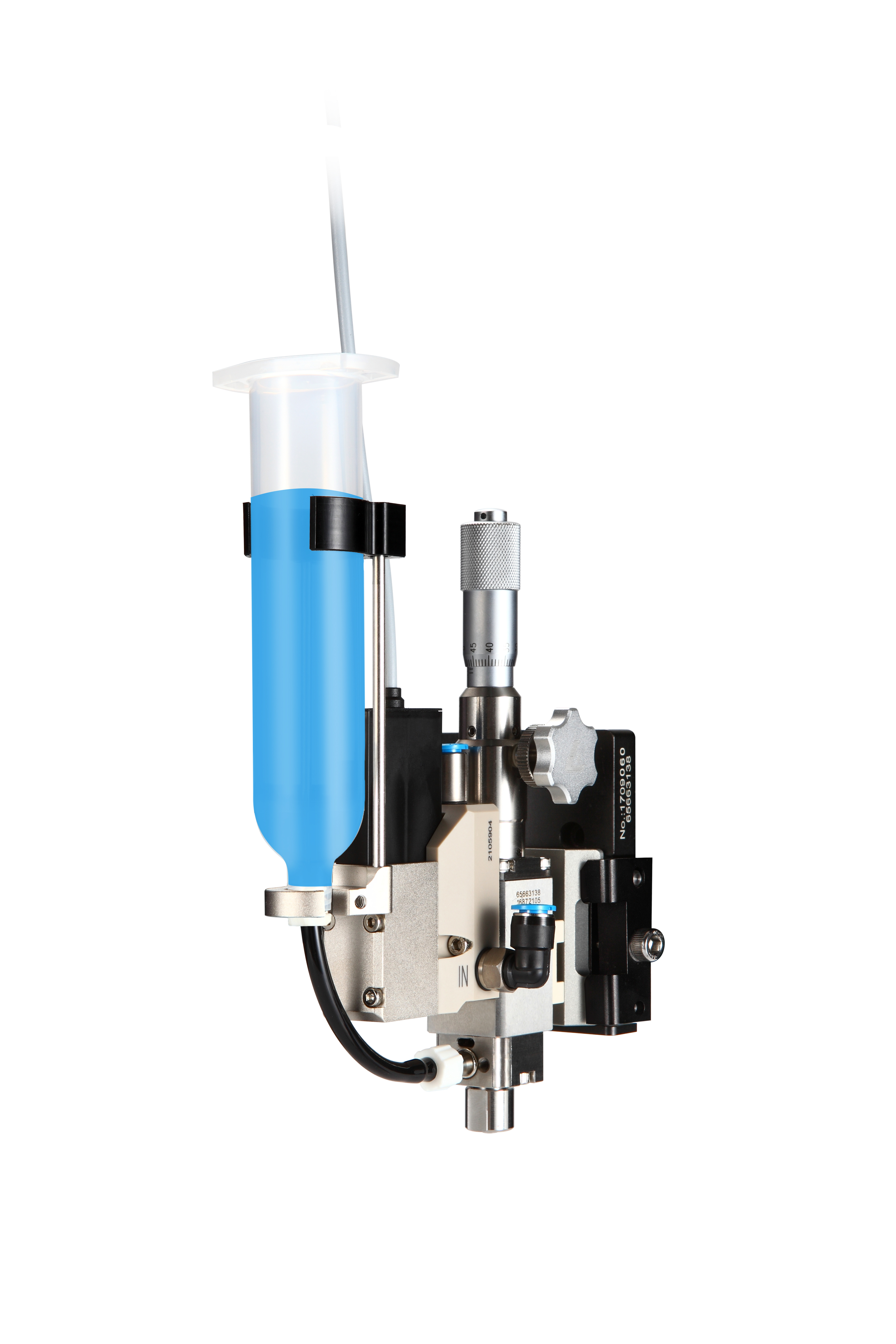
SZLKTE dispensing valves are capable of precision dam coating and dispensing.
Release time:
2025-05-28 13:00
Source:
SZLKTE
Precision coating and dispensing is a rather precise production task. Therefore, when manufacturers select dispensing valves, they will pay more attention to choosing dispensing valve equipment with higher precision. There are many manufacturers available for selection in the market. Among them, Shenzhen Leike is one of the strong and technologically advanced manufacturers. Whether it is strong or not can be judged by the customer's reputation for SZLKTE. Customers can also visit Leike's factory for inspection and experience how strong SZLKTE is.
The manufacturer of SZLKTE dispensing valves has been in the industry for many years. SZLKTE's customers come from various industries, which has brought more abundant experience to Leiko's production. Based on different products' dispensing requirements, suitable solutions can be proposed to achieve better dispensing results. For example, precise ring coating dispensing is also within the capabilities of SZLKTE dispensing valves. SZLKTE has many customers who produce precision equipment, and their requirements for dispensing equipment are higher. Choosing Leiko is also a recognition of SZLKTE from them, which makes us more confident in our products and enables us to solve the dispensing problems for customers and ensure their satisfaction, which is what SZLKTE has been striving for and persisting in all along.
The precise coating and dispensing valve for precision molds is a test for the manufacturers. Strong manufacturers will never be afraid of the customers' requirements. They will gradually accumulate experience over time, innovate based on this experience, and then give back to the customers. Only in this way can the customers trust the manufacturers.
Related News
How can daily maintenance help extend the service life of a valve body?
As a precision component that operates at high frequency, the precision dispensing valve requires scientific daily maintenance to extend its service life and maintain dispensing accuracy. Shenzhen Laike Technology has compiled the following key maintenance points for you: Daily cleaning is crucial and should not be overlooked. After finishing work, promptly remove any residual adhesive from the exterior of the valve body, especially around the nozzle and plunger area. Once cured, adhesive can cause blockages or wear, affecting subsequent use. It is recommended to gently wipe with a suitable cleaning solvent, taking care not to damage the seals. Regularly inspect sealing components—seals and other parts will naturally degrade over time during prolonged operation. We recommend checking their condition periodically based on usage frequency. If you notice signs of hardening or wear, replace these components promptly to prevent adhesive from seeping into the valve body and causing more serious damage.
The stringing issue during the dispensing process is often closely related to fluid properties, equipment parameters, and process settings. Drawing on years of industry experience, SZLKTE has compiled and optimized key points for you: Fluid temperature control is crucial. Proper heating can reduce the viscosity of the adhesive, improve its flowability, and minimize stringing and trailing. SZLKTE’s dispensing valves can be equipped with precision temperature-control modules to ensure that the fluid remains in a consistently stable working state. The back-suction parameters must be finely adjusted. The negative-pressure back-suction applied at the moment the glue dispensing stops can effectively cut off the adhesive flow, preventing dripping and stringing. We recommend gradually adjusting the amount and speed of back-suction according to the adhesive’s viscosity until you find the ideal balance.
SZLKTE takes a multi-dimensional approach to ensure zero errors and long service life for its products even under high-speed, continuous operation. The piezoelectric valve series employs piezoceramic actuation technology; its non-contact drive design eliminates mechanical wear common in traditional solenoid valves, enabling a service life of over one billion cycles. At the same time, these valves deliver millisecond-level response times, completely eliminating trailing and stringing issues. The needle valve KC-9870, on the other hand, features a specially engineered, wear-resistant material for its needle component, offering exceptional resistance to abrasion and corrosion. Even in industrial environments with prolonged operation, this valve maintains outstanding stability. Moreover, its components can be quickly disassembled and maintained, significantly reducing production downtime.
Contact Dispensing vs. Non-Contact Jetting Valves: How Should You Choose for Micron-Level Processes?
Contact dispensing involves the needle making physical contact with the substrate surface to apply the fluid. Its main advantage lies in its strong adaptability to high-viscosity fluids and relatively controllable dispensing process. However, since it requires coordinated movement along the Z-axis, the dispensing speed is limited. Additionally, there is a risk of the needle colliding with and damaging the workpiece or deforming the needle itself. Therefore, careful evaluation is necessary when applying this method in miniaturized packaging scenarios. In contrast, non-contact jetting valves use a driving mechanism to rapidly spray adhesive onto the workpiece surface without any physical contact between the needle and the substrate. This feature makes them ideally suited for substrates with uneven surfaces or those that are fragile. They excel in micron-scale processes such as bottom-fill applications for chips and precision coating. The jetting method eliminates the need for Z-axis movement, significantly boosting production efficiency while also avoiding common issues associated with contact dispensing, such as stringing and trailing.
The stability of the piezoelectric valve dispensing process directly determines product quality. Common issues such as uneven dispensing, stringing, and glue leakage can be effectively addressed through parameter adjustments and optimized matching. Laike’s piezoelectric valves support multi-level parameter adjustments, enabling precise matching of pressure, injection frequency, and nozzle aperture according to the specific characteristics of different fluids.
Blocking the hole is Piezoelectric valve The most common failures in dispensing operations are often caused by fluid solidification, residual impurities, and nozzle wear, which directly affect dispensing accuracy and efficiency. Given the structural characteristics of piezoelectric valves, these issues can be addressed in three steps: “diagnosis—cleaning—inspection.” First, stop the machine and visually inspect the nozzle for obvious glue deposits or foreign objects, determining whether the blockage is temporary or a persistent issue caused by nozzle wear.
MENU
Quick navigation
SZLKTE technology
Company Address
Rm 315, Zone E, Bldg 7, Hengda Shishang Huigu, Longhua District, Shenzhen China
